top of page



Cosmos

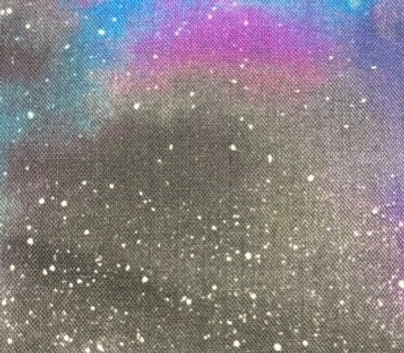
ANDROMEDA GALAXY – is a barred spiral galaxy with 1 trillion solar masses. This galaxy has a 50/50 chance of colliding with the Milky Way in the next billion years. The large elliptical galaxy is messier Messier 31, with Messier 32 a dwarf galaxy and Messier 110 another dwarf elliptical galaxy discovered by Caroline Herschel on August 27, 1783. It is a naked-eye object but all three can been seen in an eyepiece.


BUBBLE NEBULA – found in constellation Cassiopeia and is a hydrogen region that is ionized molecular cloud of partially ionized gas where star formation is taking place. This has stellar winds from a hot young central star with a giant molecular cloud. Was discovered by William Herschel in Nov 1787 and resembles a bubble that is 7,100 – 11,000 ly away. The strong stellar wind rapidly losing mass in final stage of its life causing the interstellar material of giant molecular clous travelling at supreme speeds and creates a shock front.


CAT’S EYE NEBULA – is a planetary nebula in the constellation Draco, with knots and jets bubbling over lapping complex arcs that has the inner structure of a cat iris. At the center there is a dying star with concentric rings emitting outwards. On Aug 29, 1864, bright emission lines of ionized gas with far infra-red wave lengths of stellar dust. It absorbs light from the central star and has wavelengths of molecular hydrogen and argon. There are bands of exciting ejecta moving at different speeds colliding. Discovered by William Herschel on 12 Feb 1786 and investigated with a spectroscope by William Huggins.


CHRISTMAS TREE NEBULA – in Monoceros is 2,300 ly from earth and is an emission nebula. The young blue stars are bound by heavy dust clouds with the hydrogen and helium produced by new stars. The activity creates many wavelengths of the elements which is why the image has many colors in it. It contains multiple star systems discovered by William Herschel 18 Jan 1784, 242 years ago tomorrow.


HORSEHEAD NEBULA – in the constellation Orion near the flame and running man/frog nebula. It is south of the star Antak in Orion’s belt is 1,375 ly from Earth and discovered by Williamina Fleming 1888 from a graphic glass plate at Harvard Observatory. It is a dark cloud of dust and gas with star formation in ionized hydrogen gas. It is reddish coloration is due to the ionization process of the star formation and sits right next to the Flame Nebula.


HEART AND SOUL NEBULA – Astronomers send this picture to each other for Valentine’s Day. The heart nebula is in the constellation Perseus while the Soul Nebula is in Cassiopeia. The Heart sits 7,500 ly away and was discovered by William Herschel 3 Nov 1787. Is flowing gas of ionized hydrogen and has dark dust lanes with red color coming from the radiation from the many groups of stars which are red. The soul is same distance away is also a star forming region of young stars and is also colored by the radiation of the stars and has winds.


FLAME NEBULA in Orion is an emission Nebula 1,350 ly away near the belt star Alnitak with other nebula as there are several called Orion Molecular Cloud Complex. Major star forming region, planetary system, young star clusters and dense gas and dust everywhere in infrared wavelengths why all the red.


CRAB NEBULA – supernova remnant in Taurus’ horn, with the PSR BO531+21 pulsar from the neutron star in the middle discovered in 1968. Was seen in the daytime sky in 1054AD documented by astronomers from Myian, Japanese, Chinese, and Arab manuscripts. It is 6,500 ly from earth and the man who discovered the pulsar star, also did the galactic center of MWG Sagittarius A which is a supernova. Walter Baade from Germany.


JELLYFISH NEBULA – is a supernova remnant in Gemini that is 30 – 35,000 years ago and 5,000 ly from Earth. This is two connected sub-shells with different centers with x-ray and optical emission molecular clouds. The central star is a pulsar with winds and lots of nebula inside. THE BOTTOM LIGHTER VERSES THE UPPER DARKER LOBE.


BEEHIVE CLUSTER – AKA Praesepe called a crib or manger Messier 44 is found in the breast of Cancer the crab constellation. It is an open star cluster and one of the closest ones to Earth that is visible to the naked eye. It looks like a nebula without a telescope and was observed and studied by Ptolemy and Galileo in the 1600s. it is 610 ly away full of red giants and white dwarf stars and this group is a cousin to the Haydes found in Taurus.


HOURGLASS NEBULA in the constellation Musca discovered by two women Margaret Mayall and Annie Jump Cannon why its designated MyCn 18 from observations from 1918 and 1924, at the Harvard College Observatory during a time when women were not allowed to use university or professional telescopes/observatories. Its 8,000 light years away and its shape is from fast stellar winds and clouds expanding shells from a dying star. It has elements of helium, nitrogen, oxygen and carbon. It has bi-polar magnetic lines and has the central star in the center. THE CLUTCHES CAN BE SEEN IN PERSON WERE CLOUDED OUT DUE TO THE WAY THE WOMEN WERE TREATED.


VEIL NEBULA – found in the constellation Cygnus called the western veil that is heated ionized gas and dust and a more popular section. This is a small part of an extremely large supernova loop for emission nebula, full of radio infrared and x-ray images. Most images are divided into segments, and the triangular wisp was discovered and photographed by Williamina Fleming at Harvard Observatory in 1904. It is a major x-ray source from explosion over 10,000 years ago and it’s still expanding at 60 miles per second. Located 1800 ly from earth and the star is 52 cygni is actually photo bombing the nebula as it sits in front of it.


HELPING HAND NEBULA - in Cassiopeia and is a dark nebula with large amounts of dust but some smaller reflection nebula lit by the young blue stars in Cassiopeia. The clouds are dark to light with various thicknesses and has a string rounded clouds that look like fingers and a palm of the hand. Decided to paint on HANDYMAN FABRIC and chose the paint brush and the nebula painted the surrounding reflection nebulas blue.


MONKEY HEAD NEBULA – is an emission nebula located about 6,400 ly away in the constellation Orion. It warehouses a young star cluster NGC 2175 that has stellar winds that has high energy radiation composed of hydrogen, that glows in the infrared wavelengths. It was discovered by Edouard Stephan 6 Feb 1877.


SIRIUS – Dog Star is the alpha star in Canis Major or the Greater Dog Constellation at the feet of Orion. This is the brightest star in the night sky its name means scorcher and has a small white dwarf companion star that obit each other, once every 50 years. This rendering was from my view from my eyepiece during an observation session. It sits at 8.6 ly away and id moving closer to the solar system and will increase in brightness in our skies. The process will take 60,000 years and we will all be in other places than here. It is documented all over the world in ancient astronomical works as it was an indicator for navigation, agriculture and migratory patterns of animals.

DIAMOND RING NEBULA – is a planetary nebula located in the constellation Hydra. It looks like a planet shape. It is 2,700 ly away in the constellation Hydra. It has a perfectly round shape and is a O III emission nebula that has double ionized oxygen why its not red like most others that have helium and hydrogen. The central star does not have much rotation to morph the nebular cloud structure. The star HD 83535 has no relation to the nebula as it is basically photo bombing.


ANDROMEDA GALAXY – is a barred spiral galaxy with 1 trillion solar masses. This galaxy has a 50/50 chance of colliding with the Milky Way in the next billion years. The large elliptical galaxy is messier Messier 31, with Messier 32 a dwarf galaxy and Messier 110 another dwarf elliptical galaxy discovered by Caroline Herschel on August 27, 1783. It is a naked-eye object but all three can been seen in an eyepiece.


ROSETTE NEBULA – constellation Monoceros the unicorn image of Chandra x-ray observatory is a hydrogen rich star forming region. It houses a star cluster at the center which generates the waves of nebulosity. The rounded edges of the clouds are from the 2,500 young stars throughout the area causing the waves from the central star cluster. It is 5,000 ly from Earth and has a connection to Oklahoma. OKC Astro Club submitted a resolution HB1292 to make the Rosette Nebulae the official astronomical object of Oklahoma since the flower is the rose, and the rock is the Barite Rose Rock. As of April 16, 2019, Governor Kevin Stitt make the request official.


SPARE TIRE NEBULA – in the Constellation Grus (crane constellation) and is a planetary nebula. Discovered by Australian astronomer Walet Gate in 1894 and is 3,000ly away and one of the fastest expanding planetary nebulas at a rate of 50 km a second. It has a central star that is pushing surrounding gases away from the core leaving a vacant space in the center. Because the shape looks round it is called a planetary nebula due to a resemblance to a planet.


JELLYFISH NEBULA – is a supernova remnant in Gemini that is 30 – 35,000 years ago and 5,000 ly from Earth. This is two connected sub-shells with different centers with x-ray and optical emission molecular clouds. The central star is a pulsar with winds and lots of nebula inside. THE BOTTOM LIGHTER VERSES THE UPPER DARKER LOBE.


BAT NEBULA – this ionized gas is part of the Veil Nebula of the eastern and southern part of the Cygnus loop. Cygnus the swan AKA the Northern Cross was discovered by Truman Stafford 12 Sept 1866 and is a dark nebula. It is 2,400 ly away. It is also stated to be in the constellation Ophiuchus as a cosmic Bat Nebula a dark nebula illuminated by a small galaxy located 400 million ly away that is slightly larger than our Milky Way and is 400,000 times further away than the foreground nebula.


RED SPIDER NEBULA – is a planetary nebula that sits near the heart of the Milky Way in the constellation Sagittarius. It was discovered by Edward Pickering 15 July 1882 at the Harvard College Observatory. (he had female computers-women who logged stars for the catalogues we use today. HIDDEN FIGURES – NASA MOVIE. HD names of stars Henry Draper his wife Mary completed and published the catalogues. It is 5,000 ly away and has a hot white dwarf star with magnetic fields in an S-shaped symmetrical that looks like rippling clouds. In reality are supersonic shockwaves of expanding gas.


PAC MAN NEBULA – is an emission nebula with HII – hydrogen that births star formation in the constellation Cassiopeia. It is in the Perseus arm of our Milky Way Galaxy – named from what constellation they seem to emanate from. The nebulosity is from an open star cluster about 9,200ly from earth. Discovered by Edward Barnard in Aug 1883 which consists of about 5 separate nebulas. It was designated as New General Catalogue NGC81 or Sharpless 184 with the name pac man being newer designation.


PILLOW NEBULA – AKA MAGIC CARPET found in Cyngus constellation about 3,000 ly away. Discovered by Edouard Stephan 1878 at Marselle Observatory and is one of the smallest and ell studied planetary nebula as it looks like a bright blue star. It is ionized gas from a massive neutron star with an inner structure surrounded by translucent shrouds of gas. Also has shock x-ray jests causing spike like structures that are expanding at 11 miles per second. This indicates very high temperatures rich in carbon and strong ultraviolet radiation from the central star that is 3 to 4 times the mass of our Sun. Stated that nano diamond particles have been detected.
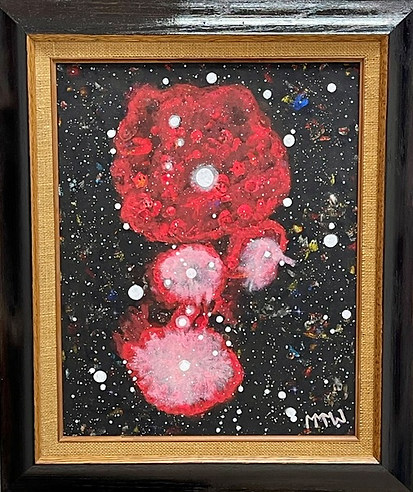

MUSHROOM NEBULA – located in Persus constellation is a group of nebulas three larger ones semi stacked to look like a red mushroom. Discovered by Sharpless Stewart at the Yerkes Observatory and surveyed the young hot stars in the H II region. These hot stars emit ultraviolet light which ionizes the surrounding gases creating the colorful red nebulas. This nebula is located about 8,000 ly away from earth.


BUTTERFLY NEBULA – found in Scorpius Constellation NGC 6302 is a bipolar planetary nebula that is an expanding glowing shell of ionized gas ejected from a red giant star late in its life. It has multiple crystalline silicates, crystalline water ice and quartz extra solar carbonates. It has 2 primary lobes with a second pair of lobs that form the wing shapes. It came from an eruptive event around 1,900 years ago and has been known since 1888, and Edward Barnard sketched it in 1907. Images show icy, and very luminous colorations.


SNOWMAN NEBULA – found in the constellation of Puppis and is an emission nebula which means there are diffuse clouds of gas that became charged by the energy of nearby massive stars and glow from their light. These hydrogen ionized regions form new stars. This sits at 6,000 ly from Earth and has three distinct balls of gases forming protostars AKA stellar nurseries. NEBULA HIDING THE LIGHT FROM STARS VERSES MUSHROOM NEBULA.

WITCH HEAD NEBULA – located in the constellation Eridanus the river constellation is a reflection nebula of a supernova remnant. It is well lit by the massive star Rigel from Orion constellation. It sits 900 ly away and is a pre main sequence region of young blue hot stars. It was discovered by Max Wolf 1891 who has a classification of stars with unusual spectral lines of heavy elements. Radio observations indicate the presence of molecular clouds of star formation.


SUNFLOWER GALAXY – in the constellation Canes Vanetici – hunting dogs and is a spiral galaxy with about 400 billion stars. Was discovered by Pierce Mechain then Charles Messier 14 June 1779. It’s a simple spiral galaxy as there is no bar in the center structure. It is extremely cloudy with fat arms that blend into each other. It is 13,000 ly from the center of the MWG and is a potential super massive black hole I the center. The arms are so long they wrap around the galaxy at 150 degrees.


FROG NEBULA - in the constellation Orion is a hydrogen II region of stellar birth which includes bright nebula which included a reflection nebula located at Orion’s Sword is also known as the Running Man Nebula. It is 1500 ly away and discovered by William Hersche in 1786. The red part is called the splattered frog nebula, but some see it laying on the back of a brown toad. It has a hot young star projected to have protoplanetary disk forming a solar system.


DEFLATED BALLOON NEBULA – in the constellation Cassiopeia is a massive galaxy cluster in that has hundreds of galaxies bound together by gravity. It sits 740 million ly from earth with hot gas emitting x-rays discovered by the Chandra Observatory. It has a supermassive black hole studies on galaxy evolution, dark matter, large scale cosmic structures.
bottom of page